
Eloquent Things: Teaching Using Real Objects
Tuesday 1st - Friday 4th December 2026, 10am - 1pm each day, Ashmolean Museum, Oxford,
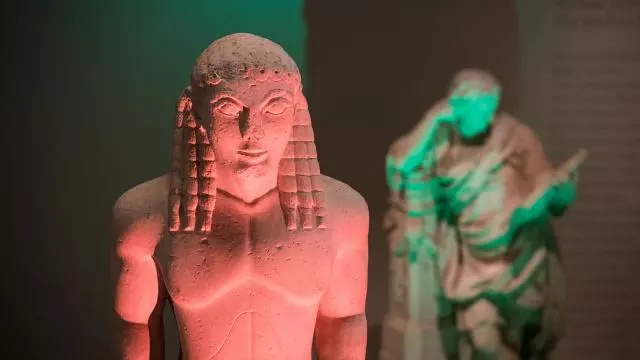
Eloquent Things is a short course, comprising four mornings in the study rooms and galleries of the Ashmolean Museum, intended as a hands-on introduction to the principles and practice of teaching with objects.
In an increasingly virtual world, direct encounters with real objects have come to be regarded as important and versatile tools in University teaching across a wide range of disciplines. The Ashmolean has established itself as a pioneer of this exciting new pedagogy.
Using works of art and archaeological material gathered from the Ashmolean’s extraordinary collections, we will discover methodologies that are also applicable to rare books, buildings, everyday objects or, indeed, any type of material culture. We will consider how you might collaborate with curatorial staff in museums, and the relative advantages and disadvantages of study-room teaching, involving object handling, and gallery-based teaching looking at objects on display.
We will also explore how teaching with objects can offer new routes into your own research; open up new ways of working with students in the classroom; or lead to inter- or multi-disciplinary forms of teaching.
- Principles of teaching with objects
- The agility of the object and the democracy of the object-based classroom
- Mechanics of handling objects of different types
- Conservation issues raised by object handling
- When not to handle
- How to look and how to teach about looking
- On the spot written assignment: object description
- Where are you likely to teach with objects?
- What courses might be appropriate for teaching with objects?
- How can objects speak into more than one discipline?
- How are objects useful in thematic teaching?
- Assignment: plan a lesson, with a partner from another discipline, using objects from the museum collections.
- Deliver and discuss the lesson plans.
- Assignment: plan a short teaching presentation on an object on display in the galleries
- Deliver and discuss gallery presentations.
- Practicalities of approaching a museum regarding collections-based teaching.
- Plenary discussion/questions.
The course is led by Dr Jim Harris, the Ashmolean’s Teaching Curator and Academic Engagement Coordinator. Jim is an art historian, trained at the Courtauld Institute of Art and specialising in late-medieval and Renaissance sculpture. His teaching at Oxford spans a wide range of disciplines from the Medical Sciences to the Humanities, calling into service the full breadth of the Ashmolean’s collections.
The course runs at the Ashmolean Museum over four consecutive mornings, 10am-1pm with a small group of 8 DPhils and Postdocs. Some additional preparation is necessary during the week, for the teaching exercises on Thursday and Friday. It is essential that participants commit to the whole course.
Spaces for this course is limited, and priority will be given to postdoctoral researchers and those in years 3 and 4 of their DPhil.
Please not that this workshop requires a £20 deposit which will be returned once you complete the course, or cancel more than 72 hours before the start of the course.
If you will struggle to pay the deposit for this course but would like to join, please contact the training team on training@humanities.ox.ac.uk